Liberty Hall

Modern Liberty Hall.jpegThe original Liberty Hall building stood on Beresford place (near Eden Quay) overlooking the Dublin’s River Liffey. It was home to the Irish Transport and General Workers Union which was founded by the labour activist Jim Larkin and was used for meetings and social events.

In 1913 Larkin and the Union called for a strike for better pay and conditions for the thousands of Dublin workers. The Employer’s Federation, led by William Martin Murphy, reacted by locking out the workers and replacing most of them with scab labour.

During the long months of the 1913 Lockout, thousands of workers and their families were fed every day at the Union’s crowded soup kitchens in Liberty Hall run by Countess Markievicz, Maud Gonne and Nellie Gifford. Larkin and James Connolly also set up a workers’ army-The Irish Citizen Amy.

1n 1914 many of the workers had to return to work as Union funds had run out. Nellie Gifford continued to work in Liberty Hall, giving cookery classes and dance classes to its members.

When the war broke out in 1914, the Union hung a large banner across the front of Liberty Hall declaring, ‘We serve neither for King or Kaiser, but Ireland.’

Irish_Citizen_Army_Group_Liberty_Hall_Dublin_1914

In 1916 James Connolly was running Liberty Hall. Connolly’s Citizen Army and The Irish Volunteers united to plan and fight in the 1916 Rising. Liberty Hall became a hub of operation with bombs and ammunition being made and supplies organised for the rebellion against the British in Dublin. The proclamation was also secretly printed there.

Thousands turned up in Liberty Hall on Easter Sunday 23rd April 1916 only to discover that Eoin McNeill, head of the Volunteers, had issued orders cancelling the Rising. However Padraig Pearse, Tom Clarke, Sean MacDiarmada, James Connolly, Thomas MacDonagh, Joseph Plunkett and Eamonn Ceannt were determined to go ahead with the planned rebellion.

On Easter Monday 24th April, a much reduced army of rebels gathered at Liberty Hall and set out across the city. Padraig Pearse and James Connolly led their large group of men and women towards the GPO. Nellie Gifford marched with her group under Commandant Michael Mallin to take St Stephen’s Green. The Rising had begun.

On Wednesday 26th of April, Dublin was a city was at war. A British gun-boat, the Helga, sailed up the River Liffey and bombarded and destroyed the Union building which was actually unoccupied.

Liberty Hall was later rebuilt and restored but in the 1950s, it was declared unsafe and had to be demolished. The new Irish Workers’ Union headquarters, a sixteen storey glass tower, designed by architect Desmond Ri O’Kelly was finally completed in 1965.

Dublin’s first and tallest skyscraper, a controversial landmark.

There are plans to replace it though many Dubliners have come to like it.
National Library of Ireland

The National Library of Ireland on Kildare Street in Dublin was my first step to writing about the 1916 Easter Rising.

This wonderful old library is one of my favourite places in Dublin. I am a library member and regularly visit it for research purposes. It contains a huge amount of literary and historical documents, manuscripts, books and photographs. The library is not just an archive of the past for us to discover, but also a national treasure trove for us to explore.

The NLI contains many of the important 1916 documents, letters and personal papers of those involved in the 1916 Rising and it was there I began my research into the Gifford family.

I was privileged to be able to get access to the Gifford, MacDonagh and Plunkett family papers. These papers are a huge resource for historians, academics, students and writers and for anyone who has an interest in history.

It was very fitting that after all my time researching and writing my book, Rebel Sisters, that it was launched in the National Library on 4th February 2016.

Signatories 1916, an exhibition based on the seven leaders of the Rising who signed the proclamation, is on display in the Main Hall of the Library throughout 2016.

This slideshow requires JavaScript.

Mountains to Sea and Ennis Book Club Festivals

I had a wonderful time in lovely Ennis talking at the Ennis Book Club Festival about Rebel Sisters and my writing. Lots of teachers, librarians and history students came along. The Ennis Book Club Festival’s varied programme was really excellent, with something to appeal to everyone.

I wish that I could have stayed longer but I had to rush back up home to Dublin on the train as I was talking at the Readers’ Day in Airfield in Dundrum, which is part of the Mountains to Sea Festival.

Airfield is one of my favourite places and was a wonderful setting for the Readers’ Day with the beautiful backdrop of the estate and gardens. Once home to the Overend sisters, it is now enjoyed and visited by so many people. It was lovely to listen to my friends Sinead Moriarty and Sheila O’Flanagan talk about their writing before I joined the crowd for lunch.

It was great to meet and talk to fellow 1916 enthusiast and writer David Kenny whose own book The Splendid Years about his great-aunt Maire Nic Shiubhlaigh, the Abbey actress, has just been published. The two of us could have stayed all afternoon talking about 1916. It is very heartening to see such a huge interest in the lives of the women of 1916.

This Sunday, March 13th at 4.00pm the fun continues in the Pavilion Theatre in Dun Laoghaire for The Great Big Family Book Show as I join Eoin Colfer, Ryan Tubridy, Judy Curtin and Philip Ardagh to talk about our favourite children’s books!

Thank you so much to programme organisers Bert Wright and Sarah Webb from the Mountains to Sea DLR Book Festival for organising it all.

This slideshow requires JavaScript.

Pearse Museum and St. Enda’s Park

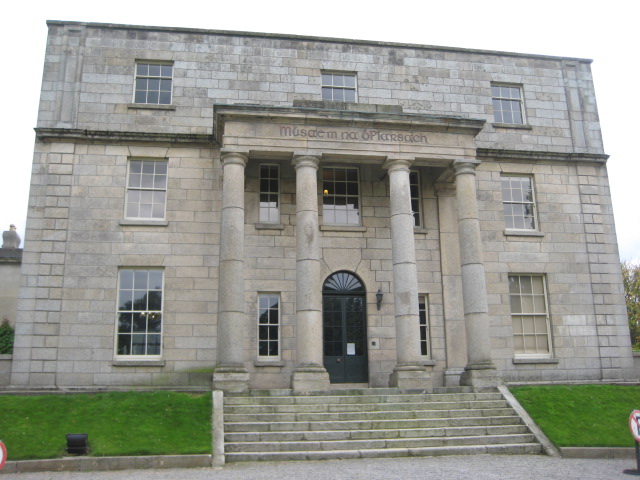
Pearse MuseumThis wonderful old Palladian style building was originally home to ‘Saint Enda’s’ (Scoil Eanna) the school for boys set up by 1916 leader Padraig Pearse. Visiting the headmaster Padraig Pearse’s study, the school-rooms, dormitory and the magnificent grounds, it is easy to see how it became the ideal place for Padraig Pearse to put his new type of Irish education for boys into practice. He first opened Saint Enda’s school in 1908 in Cullenswood House in Ranelagh, which was close to Dublin city centre.

A pioneering headmaster, Pearse believed that instead of just following the British curriculum, Irish boys and young men should learn about their own country; its history, geography, literature, poetry, music and culture. At St Enda’s he and his brother, the artist Willie Pearse, and teachers Thomas MacDonagh and Con Colbert set out to educate the boys in the Gaelic tradition. The pupils were bilingual and were made to feel proud of their Gaelic heritage and tradition and played traditional Irish games and sports.

Inside Pearse MuseumThe Gifford sisters first visited St Enda’s school with the well-known journalist and suffragette Norah Dryhurst. She introduced Muriel, Grace and Sidney to Thomas MacDonagh, telling him about how beautiful they were and advising him to marry one of the sisters. He gallantly remarked how difficult it would be to choose one of them.

In 1910, Padraig Pearse decided to move St Enda’s to a much larger property at The Hermitage in Rathfarnham. Situated on almost fifty acres of grounds there was plenty of space for the boys to play sports and for Countess Markievicz’s troop of boys, Na Fianna, to train and drill and exercise.

Garden Pearse MuseumThe Gifford sisters, like most of Padraig Pearse’s friends, were very impressed by his wonderful new school.

The Pearse Museum opens daily and gives a great sense of Padraig Pearse’s School and contains a selection of his writings and some Irish art work.

There is no entrance fee.

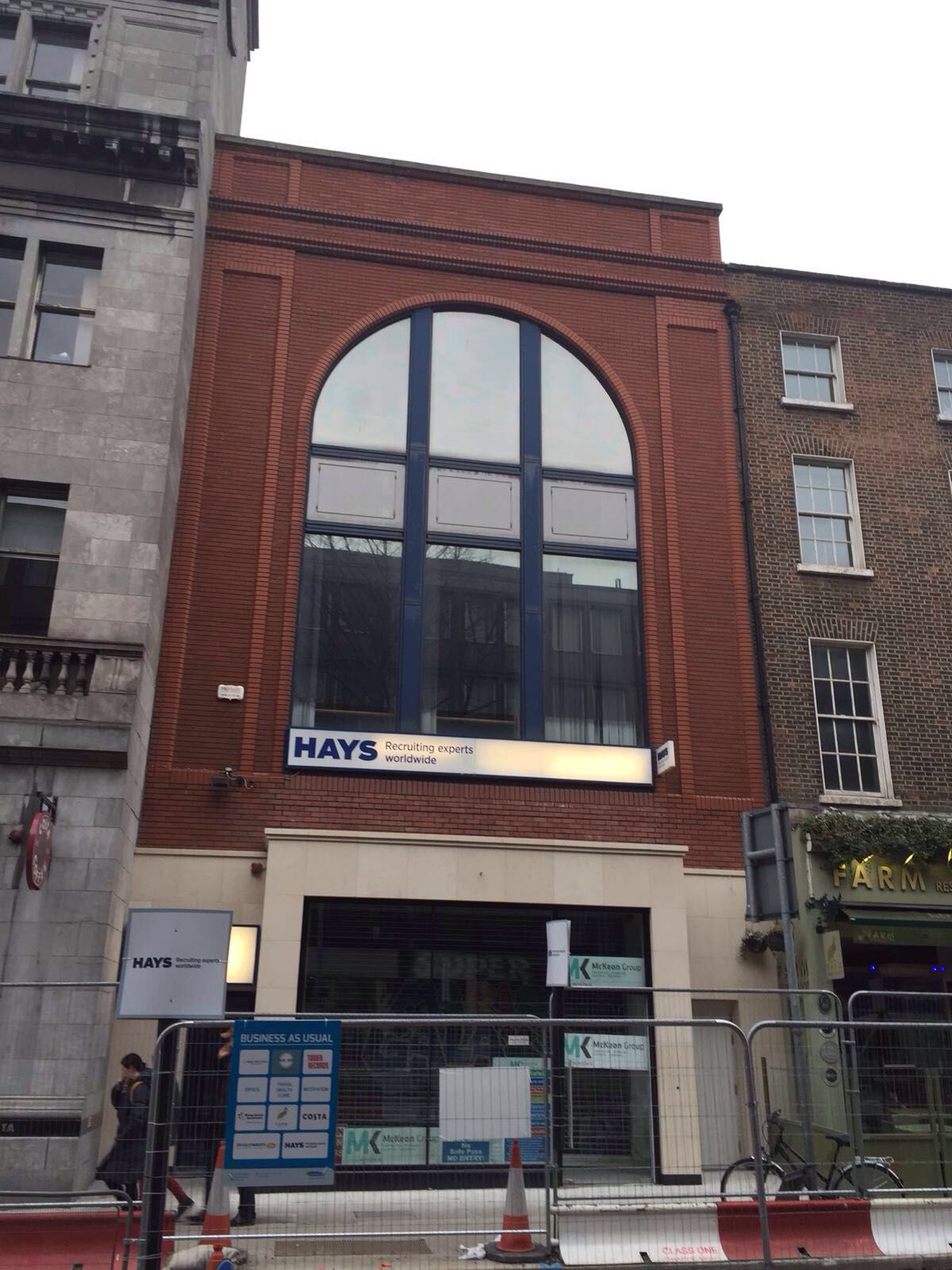
2 Dawson Street – Headquarters of the Irish Volunteers

2 Dawson Street Spring 2016

2 Dawson Street Spring 2016

It’s hard to believe that this modernised building was once headquarters of the Irish Volunteers. At one stage they had over a hundred thousand members training and drilling all around Ireland.

It was in 2 Dawson Street that at Thomas MacDonagh, Sean MacDiarmada, Padraig Pearse, Joseph Plunkett and many of their friends met and made their plans for the upcoming rebellion. The building was under constant surveillance by the police, who watched and marked down the comings and goings of the rebels.

Nellie Gifford ran her small employment bureau in a room there which Thomas MacDonagh and his fellow volunteers kindly agreed to let her use. She was determined to help young Irish men avoid being conscripted in to the British army. Nellie interviewed Michael Collins in her office in January 1916 and introduced him to Joe Plunkett, who offered Collins a job to help with the financial accounts and affairs of the Plunkett family.

It is easy to pass this building on Lower Dawson Street, across from Trinity College, without any awareness of its important place in history.

I am hoping that in time Dublin City Council will mark it with a plaque or some form of recognition.